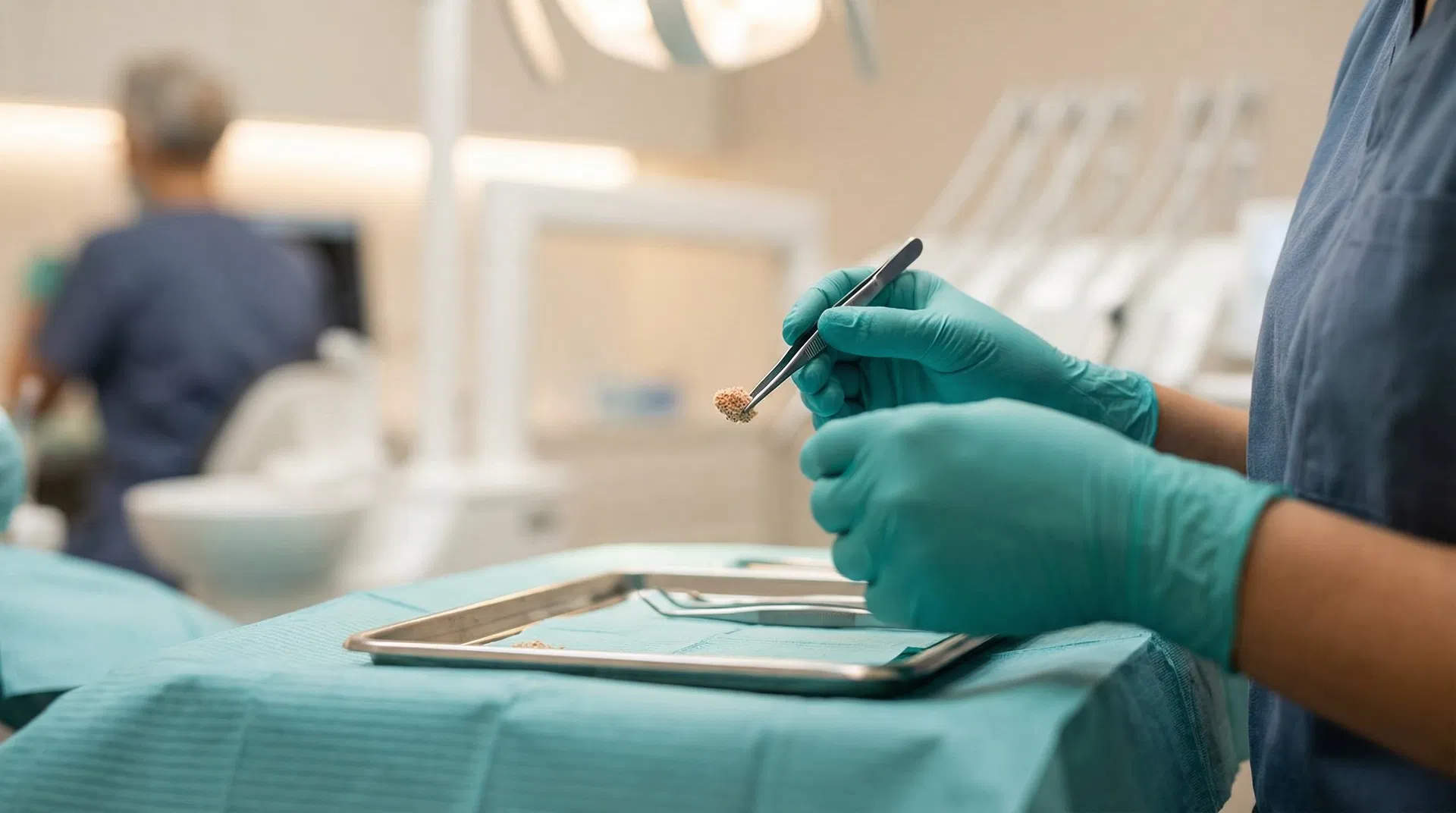
Bone Grafting
Rebuild jawbone density to support dental implants and restore your oral foundation.
What Is Bone Grafting?
Bone grafting is a surgical procedure that rebuilds or adds bone to the jaw where it has been lost. The jawbone can lose density and volume for several reasons — tooth loss, gum disease, injury, or long-term denture use. When there is not enough bone to support a dental implant, bone grafting creates the strong foundation needed for successful implant placement.
Think of it this way: a dental implant needs solid bone to anchor into, just like a fence post needs firm ground. If the ground is too soft or shallow, you need to build it up first. That is exactly what bone grafting does for your jaw.
Types of Bone Grafts
There are several types of bone grafting procedures, and the right one for you depends on how much bone you need and where it is needed:
- Socket preservation graft: Placed immediately after a tooth is extracted to prevent the bone from shrinking. This is the most common type and is often done at the same time as the extraction.
- Ridge augmentation: Builds up the width or height of the jawbone ridge when it has already resorbed. This creates enough bone volume for implant placement.
- Sinus lift (sinus augmentation): Adds bone to the upper jaw in the area of the molars and premolars by gently lifting the sinus membrane and placing graft material beneath it.
- Block bone graft: Uses a small block of bone (usually from another area of the jaw or chin) to rebuild larger areas of bone loss.
Bone Graft Materials
Modern bone grafting uses several types of materials, each with its own advantages:
- Autograft (your own bone): Harvested from another area of your body, usually the chin or back of the jaw. Considered the gold standard because it contains living bone cells.
- Allograft (donor bone): Processed human bone from a tissue bank. Safe, well-studied, and eliminates the need for a second surgical site.
- Xenograft (animal-derived): Usually bovine (cow) bone that has been processed to be biocompatible. Provides an excellent scaffold for new bone growth.
- Synthetic materials: Lab-made bone substitutes such as calcium phosphate ceramics. A good option for patients who prefer not to use human or animal tissue.
We will discuss the best material option for your specific situation during your consultation and answer any questions you may have about safety and effectiveness.
Recovery and Healing
Bone graft recovery varies depending on the type and size of the graft, but here is a general overview:
- Day 1–3: Mild to moderate swelling and discomfort. Manage with prescribed medications and ice packs. Stick to soft foods and avoid the surgical area when chewing.
- Week 1–2: Swelling decreases. Stitches may dissolve or be removed. You can gradually return to normal activities.
- Month 3–6: The graft material integrates with your natural bone. This healing period is necessary before dental implants can be placed.
In many cases, we can place the bone graft and the dental implant at the same time, which reduces the number of surgeries and shortens your overall treatment timeline.
Frequently Asked Questions
The procedure is performed under local anesthesia or sedation, so you should not feel pain during surgery. Afterward, most patients describe the discomfort as mild to moderate — similar to having a tooth extracted. Prescribed medications manage any post-operative pain effectively.
Most bone grafts take 3 to 6 months to fully integrate with your natural bone. Smaller grafts like socket preservation may heal faster. We monitor your progress with periodic X-rays.
In many cases, yes. If there is enough existing bone to stabilize the implant, we can place the graft and implant simultaneously. This is determined during your consultation based on your 3D imaging.
Bone grafting in Houston typically ranges from $300 to $3,000 depending on the type and extent of the graft. Socket preservation is on the lower end, while sinus lifts and ridge augmentation are more involved. Insurance often covers bone grafting when it is needed for implant placement.
Related Procedures
Wisdom Teeth Removal
Safe, comfortable extraction of impacted or problematic wisdom teeth with sedation options for every comfort level.
Dental Implants
Permanent tooth replacement that looks, feels, and functions like your natural teeth. Single implants to full-arch restoration.
All-on-4 Dental Implants
A full set of fixed teeth supported by just four implants. Transform your smile in a single visit.